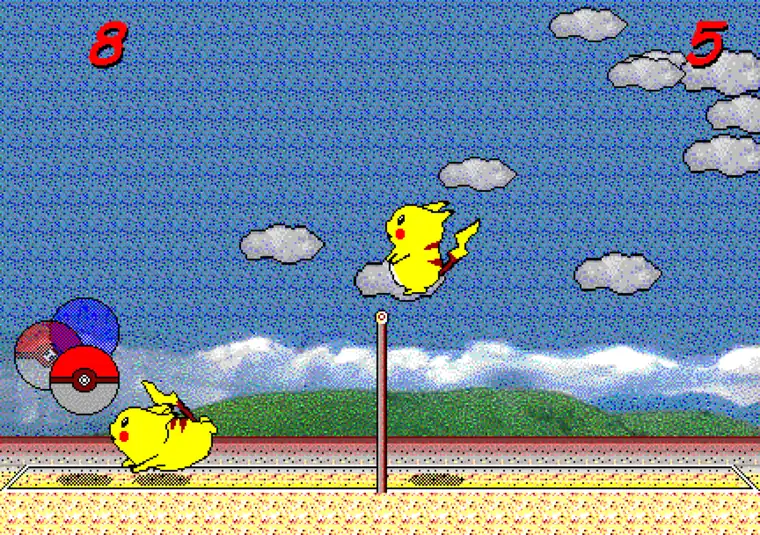
- Original release
- 1997 Windows game
- Original credits
- SACHI SOFT / SAWAYAKAN Programmers and Satoshi Takenouchi
- Web remake release
- March 26, 2020
- Remake method
- JavaScript reimplementation based on reverse engineering
Quick answer: what is the history of Pikachu Volleyball?
The original game, whose Japanese title is 対戦ぴかちゅ~ ビーチバレー編, was released for Windows in 1997. The verified project documentation credits SACHI SOFT / SAWAYAKAN Programmers and Satoshi Takenouchi. Its appeal came from a tiny rule set: two yellow characters, one ball, a net, responsive jumping and directional hits.
More than two decades later, developer Kyutae Lee, known as gorisanson on GitHub, studied the original machine code and recreated core behavior in JavaScript. The public browser edition launched on March 26, 2020. That distinction matters: today's web version preserves the mechanics, but it is a reimplementation rather than a hosted copy of the old Windows EXE.
1997: the original Windows game
The 1997 release established the court dimensions, movement, ball physics and computer opponent that players still recognize. It was designed for short solo or local two-player matches, so it did not need a large roster, campaign or complex menu system. The simplicity made the game easy to share in schools, computer rooms and early web communities.
Reliable project sources do not present the original as a Nintendo or Pokémon Company release. It should be described as an old fan-made Windows game with the credits shown in the original program and repeated by the modern reverse-engineering projects. This site is likewise an independent fan resource.
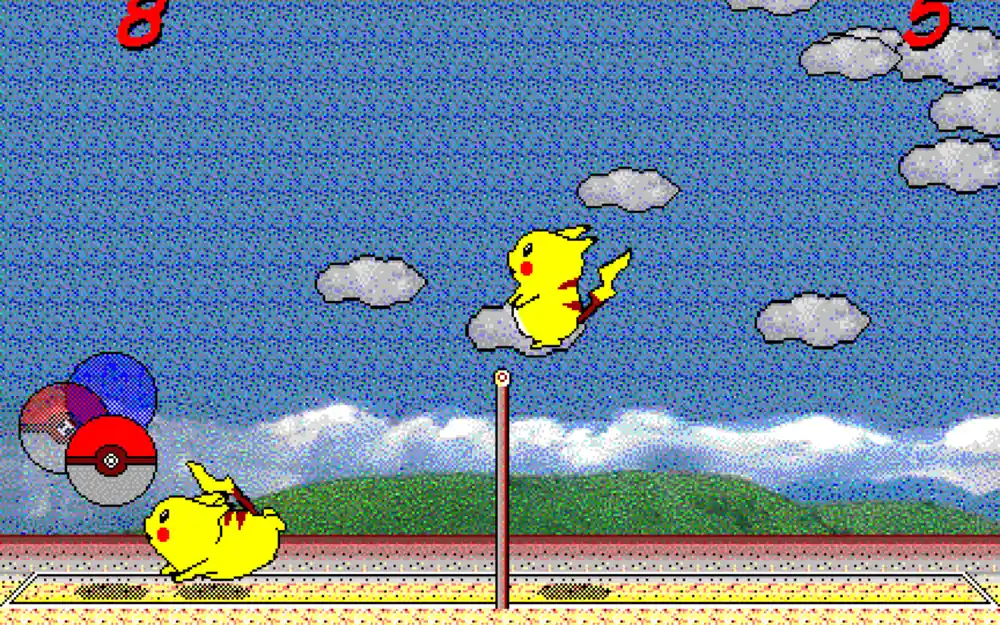
2020: reverse engineering became a browser remake
The modern repository explains that the physics engine and AI were reconstructed from important parts of the original machine code. Tools including Ghidra, Cheat Engine, OllyDbg and Resource Hacker helped identify coordinates, functions, timing and embedded resources. The recreated logic was then implemented in JavaScript, while PixiJS handled rendering.
This approach explains why the browser game feels close to the old version without distributing the original executable. It also made the project inspectable: players can review the physics code, build the project locally and compare documented changes instead of downloading an unknown EXE from a mirror.
How the web edition evolved after release
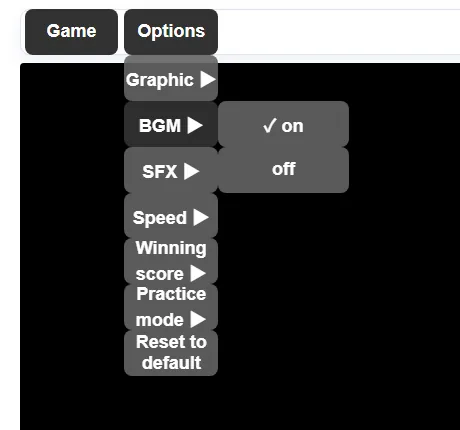
The official update history records practical refinements rather than a complete redesign. Early 2020 fixes aligned diving direction and the left-side keyboard mapping with the original. Chinese translation arrived in June 2020, dark mode in January 2022, saved BGM, sound-effect, speed and winning-score options in May 2022, and sharp or soft graphics options in October 2023.
These changes show the purpose of the remake: preserve the core match while making it easier to run in current browsers. Options and translations improve access, but the basic court, scoring rhythm and physics remain the recognizable center of the game.
P2P online and related branches
A separate P2P Online project added WebRTC data channels to the offline browser code so two people could play over the internet. Its documentation says both peers synchronize input and random-number state to keep the deterministic game state aligned. This is a related branch, not evidence that the 1997 original contained internet multiplayer.
Other community experiments, including stronger AI variants, build on the same interest in the compact physics system. Keep the names separate when choosing what to play: the offline web remake, P2P online branch and AI-focused versions solve different needs and may have different maintainers, controls and network behavior.
What has stayed the same, and what changed?
The enduring identity is the one-on-one rally: move, jump, strike and recover before the ball reaches the floor. The browser project aims to reproduce the original physics and AI closely, while modernizing delivery through JavaScript, browser rendering, translations and saved options.
For players, the safest practical choice is to use a transparent browser build or a verified source repository. Historical interest does not require installing an old executable, and the browser remake provides a clearer chain of documentation from code to update history.