- Winning score
- 5, 10, or 15 points
- Point condition
- Ball touches the opponent's floor
- Restart
- Next rally begins automatically
- Players
- Solo vs CPU or local two-player
Quick answer: what are the Pikachu Volleyball rules?
Send the ball over the net and make it touch the opponent's floor before it touches yours. Every rally produces one point. There is no side-out scoring, rotation order, libero, formal service fault system, or three-contact team limit because each side has one Pikachu and the game uses arcade physics.
The default winning score is 15, but Options can switch the target to 5 or 10. The first player to reach the selected score wins immediately; no two-point margin is required. Agree on the score target and game speed before a competitive match.

How scoring and winning work
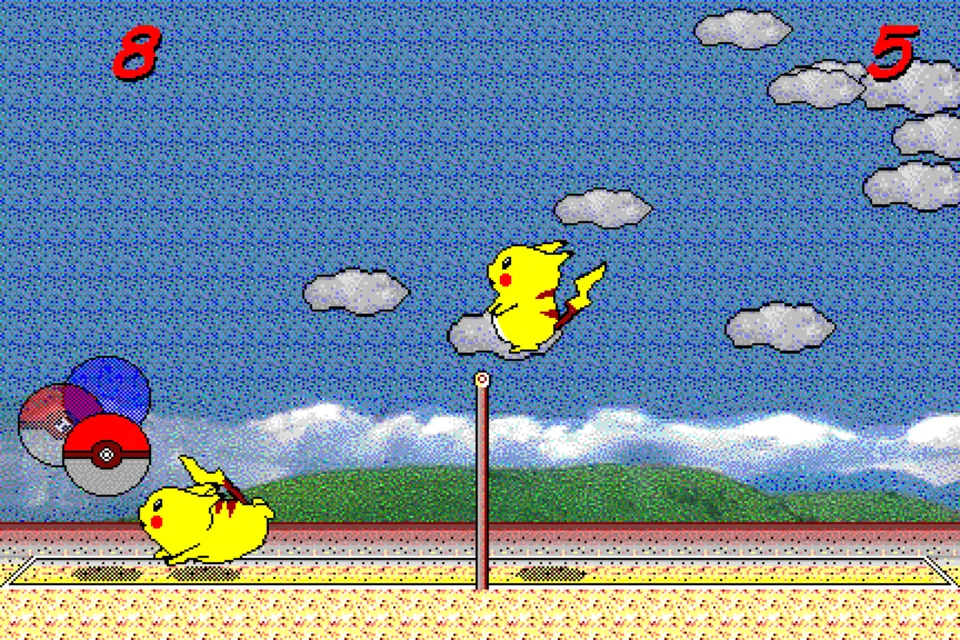
A point is awarded when the ball reaches the ground. If it lands on the left court, the right player scores; if it lands on the right court, the left player scores. A net touch does not automatically end the rally. The ball can clip the net and continue if its movement carries it into playable space.
The source sets 15 as the default and exposes 5, 10, and 15 in Options. Changing the target during a match can trigger a warning if someone has already reached the new limit. For a series, keep one target for every game and decide best-of-three before starting.
- Every rally awards one point.
- Floor contact decides the point.
- No two-point winning margin is required.
- Use the same target throughout a series.
Serve, contacts and net play
After a point, the next rally begins automatically with the ball on the side that conceded. There is no manual service toss or service-zone rule. Move early, let the ball drop to a controllable height, then use a jump or directional hit to send it across.
There is no visible referee count for contacts. One Pikachu may bump or redirect the ball repeatedly while it remains airborne. The net and collision system keep each player on their own side, while the ball can rebound from the net as a tactical part of the rally.
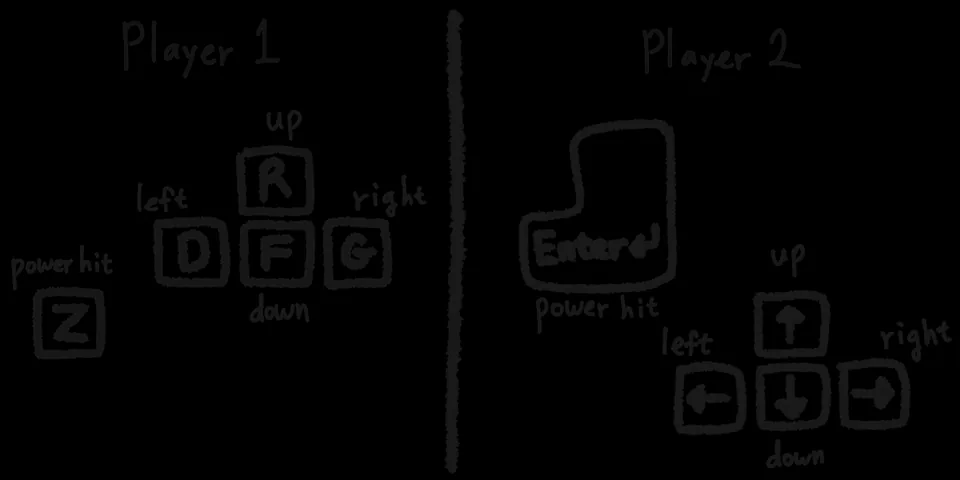
Fair rules for local two-player matches
Local games share one keyboard, so fairness starts with setup. Confirm both key zones, test simultaneous movement and jumping, and use a keyboard that registers multiple keys. If one side cannot jump while the other holds movement keys, change the hardware before counting results.
Agree on fullscreen, game speed, winning score, warm-up rallies, and whether focus loss causes a replay. A practical rule is to replay only when the browser loses focus or clearly fails to receive input—not when a player presses the wrong key.
- Test both players at the same time.
- Use 5 for practice, 10 for short matches, or 15 for the classic default.
- Define technical replays before the match.
- Keep speed and display settings equal.
What differs from official volleyball?
Pikachu Volleyball borrows the court and net, not the complete rulebook. There are no six-player rotations, positional faults, antenna judgments, substitutions, time-outs, formal service order, or built-in best-of-five sets.
Use the game's scoreboard and physics as the authority for a match on this site. Real volleyball rules are useful only if players choose to add them to an external event.
A simple match format for friends
For a balanced casual session, play best-of-three games to 10. Switch seats after each game, keep the same speed, and allow one short control check before the decider. This gives time to adapt without making a set too long.
Beginners can start with a first-to-5 practice game and ignore the result. Focus on keeping the ball airborne, recovering toward mid-court, and reading short versus deep returns. Move to 10 or 15 after both players can return consistently.